
Leah Prevost
The boardroom question that keeps L&D leaders awake at night: “How do we know this training will actually move the needle?” It’s a fair challenge. Traditional learning needs analysis often feels like trying to hit a moving target with a blindfold on – by the time you’ve identified a skill gap, the business has already suffered the consequences.
But what if you could see around corners? What if you could predict which skills your organization will need before the gaps become painful realities that impact your bottom line?
Predictive learning needs analysis transforms L&D from a reactive cost center into a strategic business function. It’s the difference between being the department that scrambles to fix problems and being the one that prevents them from happening in the first place.
Why Reactive Learning is Costing You More Than You Think
Skill gaps aren’t just inconvenient – they’re expensive. Research by McKinsey shows that companies with significant skill gaps are 37% less likely to achieve their revenue goals¹. But the real cost isn’t just in lost productivity; it’s in the compound effect of missed opportunities, delayed projects, and the erosion of competitive advantage.
Consider the typical scenario: Your sales team struggles with consultative selling techniques. By the time this becomes obvious through poor quarterly results, you’ve already lost deals, frustrated customers, and potentially damaged relationships. The reactive training program you roll out might fix the problem in six months, but the revenue is already gone.
This reactive cycle is exhausting and inefficient. Predictive analysis breaks it by shifting your focus from firefighting to fire prevention. Instead of constantly looking in the rear-view mirror, you can finally look through the windscreen.
The Strategic Power of Prediction
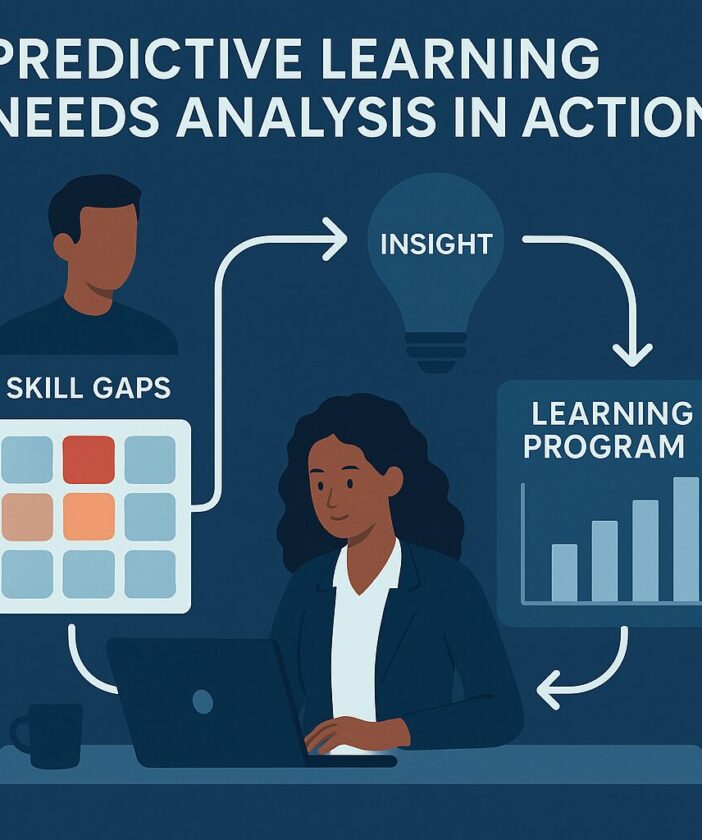
Predictive learning needs analysis doesn’t require a crystal ball – it requires smart use of the data you already have access to. By analyzing job skill requirements across your industry and comparing them with your current capabilities, you can spot trends before they become crises.
The LinkedIn Workplace Learning Report reveals that 87% of L&D professionals recognize the critical importance of proactive skill building², yet most still operate reactively. The organizations that get ahead are those that treat skill development like they treat financial forecasting—as an essential strategic planning exercise, not an afterthought.
When you can demonstrate that your learning strategy is based on predictive insights rather than hunches, you transform every conversation with senior leadership. You’re no longer asking for budget based on assumptions; you’re presenting investment opportunities backed by data.
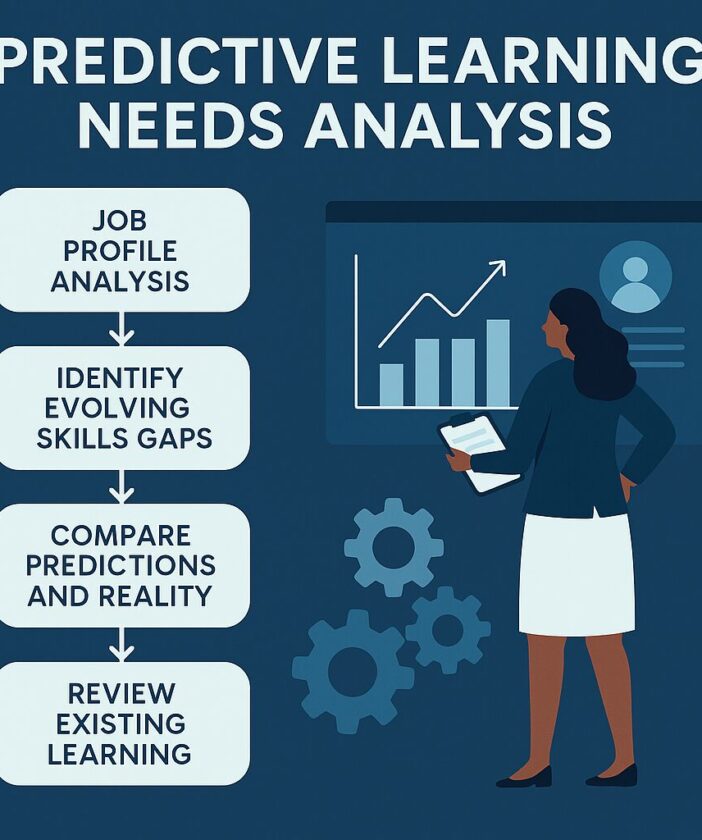
A Proven Four-Step Approach
Step 1: Job Profile Analysis – Your Skills Intelligence Foundation
Start by building your skills intelligence database. Analyze job postings across your industry, not just within your organization. Look at what your competitors are hiring for, what skills appear in promotion announcements, and which capabilities feature most prominently in job descriptions for roles like yours.
This external benchmarking is crucial because it reveals the skills ecosystem your organization operates within. If 80% of similar roles in your industry require data visualization skills, but only 40% of your team possesses them, you’ve identified a predictive gap before it becomes a performance problem.